The windows are moving: how the Latin American blueberry calendar is changing
By: Natalia Rubio Iversen
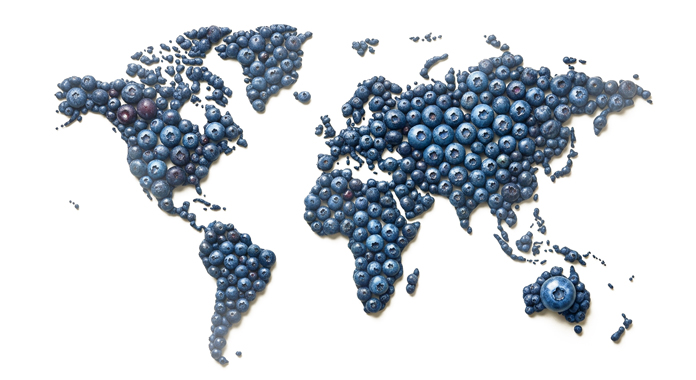
The seasons of blueberry Latin American markets no longer follow such clear boundaries. Peru maintains significant volumes when Argentina enters the market and continues exporting when the Chilean season begins. Later, Mexico concentrates its largest supply in the spring, when South American presence in North America decreases.
The duration and timing of these campaigns also vary from season to season. Recent cycles show periods of greater overlap between some of the region's main origins, and a calendar that requires an increasingly less linear interpretation.
Peru extends its season
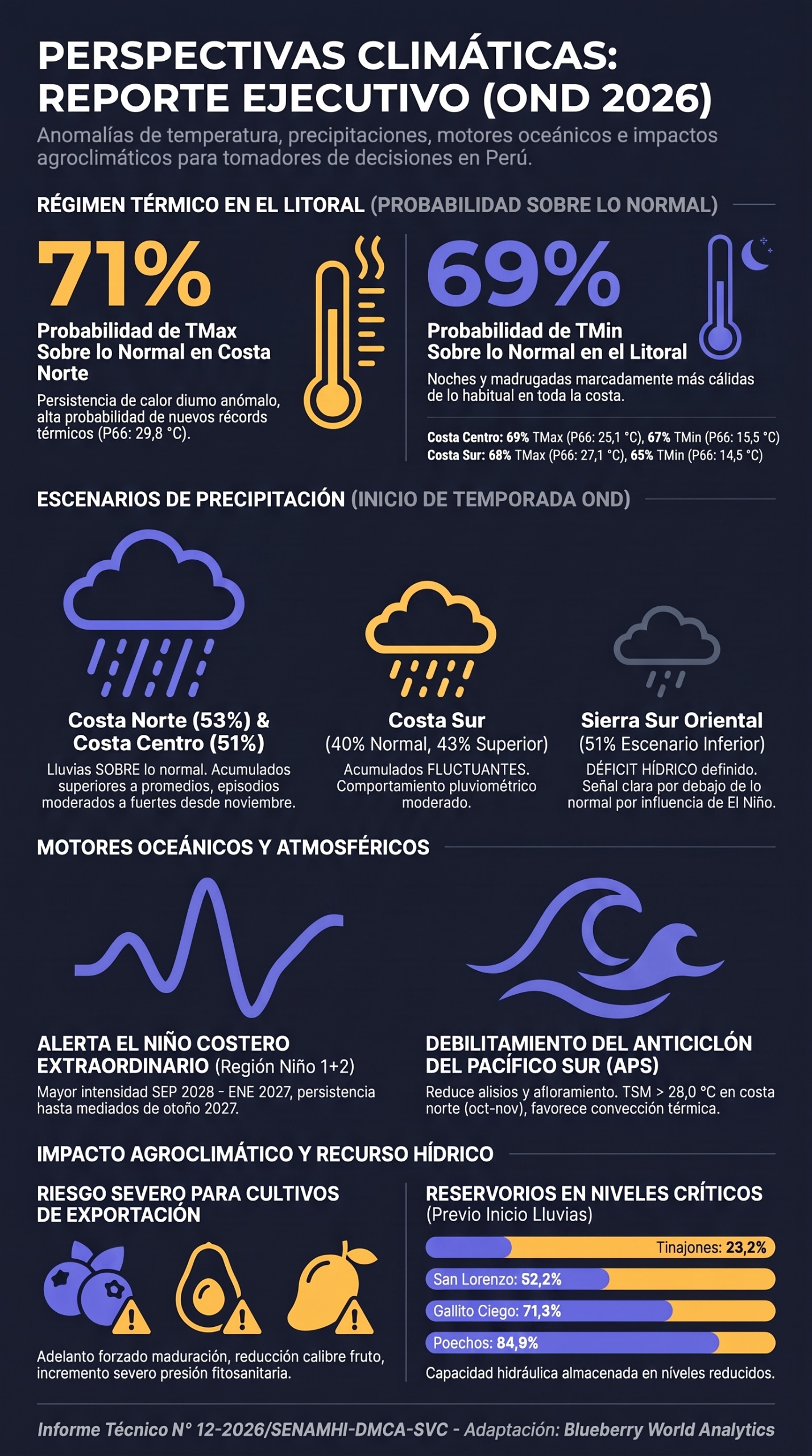
Peru's expansion significantly altered the regional calendar of blueberry. In the 2025/26 season, the country exported more than 380 tons of fresh fruit and recorded shipments throughout almost the entire year, although with a strong concentration between August and December.
The shipments of blueberry Production grew from May until reaching its peak in October, at nearly 90,8 tons. In November it still totaled 66,2 tons and in December 42,2 tons, before declining during the first months of the following year.
The latest sector projections for 2026/27 again place Peruvian exports above 400 tons. The distribution of that volume will depend on how the season unfolds, but supply will continue to concentrate a significant portion of its shipments during the second half of the year.
This volume extends the Peruvian presence precisely over the entry periods of other South American suppliers.

Argentina coincides with the strong Peruvian stage
Argentina concentrates its harvest between August and November, when Peru is still moving a significant part of its exports.
The Argentine Committee of Blueberries Production is projected to reach approximately 15 million kilos by 2026, with around 60% destined for export markets. September and October account for approximately 70% of the expected availability for the season.
The difference in scale compared to Peru is significant. Argentina works with smaller volumes and programs for Brazil, Europe, the United Kingdom, Asia, and the Gulf countries, but its main export period coincides with the peak of Peruvian exports.
Chile enters while Peru remains present
Chile typically carries out its campaign between October and March, concentrating its highest volumes during the Southern Hemisphere summer. In 2025/26, it exported 92.900 tons of [unclear - possibly "coffee" or "coffee"]. blueberries Fresh produce shipments were up 2,7% compared to the previous season. Shipments of new varieties increased by 14%, while shipments of traditional varieties fell by 1%.
As Chile begins to increase its shipments, Peru still maintains volumes in the market, especially during November and December. The transition between the two origins thus presents a period of overlap before Peruvian supply enters its decline phase.
Chilean harvest dates are also not identical from season to season. In Ñuble, for example, the 2025/26 harvest was brought forward by 10 to 12 days due to a greater accumulation of heat during the spring.
These variations can extend or shorten, from one season to another, the period in which Chile shares the market with the final stage of the Peruvian supply.

Mexico is betting on spring
Mexico presents a different configuration. Although it can produce for several months, its largest volumes are concentrated in spring, between the decrease in South American supply and the increase in US production.
The International Blueberry Organization identifies February through April as a particularly important period for Mexican blueberry imports to the United States. North American market records also show a clear pattern: Peru accounts for a significant portion of imported blueberry supplies between September and February, while Mexico increases its presence from February onward and maintains supply until May.
The 2025/26 Mexican season ended with approximately 74 million kilos exported, compared to 62 million kilos two seasons prior. This recovery coincides with a varietal renewal process and a greater concentration of supply in the spring.
Unlike the cross-border trade that occurs during the second half of the year between South American origins, Mexico thus maintains a more marked position after the reduction of the main volumes coming from the south of the continent.

The match varies depending on the market
Calendar overlap does not occur in the same way in all destinations.
Peru distributes large volumes across North America, Europe, and Asia. Chile maintains a strong presence in Europe and the United States, while Mexico is closely linked to the North American market. Argentina operates on a smaller scale and with programs distributed among various destinations.
The overlap becomes more significant when these offerings converge in the same market. The second half of the year shows the most evident convergence between Peru, Argentina, and later Chile; in North America, the reduction in South American supply then opens the door to a greater Mexican presence during the spring.
The regional calendar therefore maintains distinct periods, but with less marked transitions than a simple succession between countries. For blueberry producers and exporters, knowing when their window begins is no longer enough; they must also consider which other origins will be present and to which markets that supply will be directed.
Read also:
- Global blueberry market overview: windows, logistics, and pricing reshape the supply map
- Blueberry exporters concentrate Peruvian supply and define trading windows
- The new blueberry war isn't in the fields: it's in logistics, data, and timing.
- Blueberries: Mexico leads the way and California takes over in the North American calendar
Previous article
Oppy expands the Happy Berry brand into the blueberry categoryARTÍCULOS RELACIONADOS