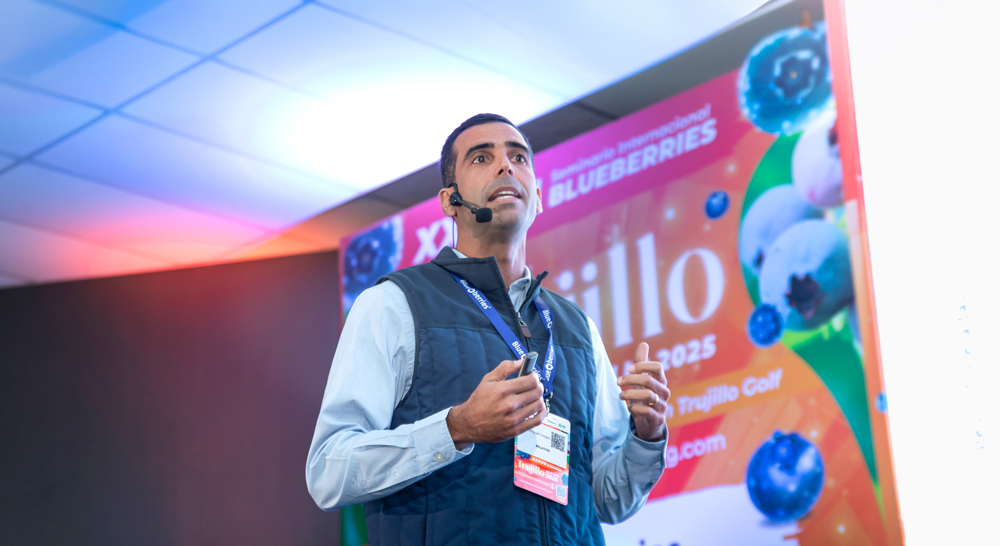
Cort Brazelton: “New genetics are having a major impact on the global blueberry business”

New genetics has become one of the main drivers of transformation in the global business of blueberryWhile for much of recent history varietal development was focused on solving production problems—such as climate adaptation, yield, firmness or post-harvest life—today its impact also extends to consumption, marketing and value capture.
For Cort Brazelton, President & CEO of Fall Creek, one of the most visible changes is that new varieties are redefining what the market expects from a blueberry.
“The new varieties of blueberries They are already having a major impact. They are influencing consumption, the producer's economics, yield, and consumer expectations. New genetics are helping to redefine what a [product/product] can be. blueberryproducing it bigger, firmer, sweeter, with better flavor, more consistent and with a better post-harvest life.”
This statement encapsulates a significant shift for the industry. For years, the focus was on producing more fruit. Today, however, the challenge increasingly lies in producing better fruit, capable of meeting the demands of more discerning consumers and markets where differentiation is becoming ever more crucial.

Beyond a leading variety
In recent years, genetic platforms like Sekoya have garnered much of the industry's attention. However, Brazelton cautions that the discussion shouldn't focus solely on finding a replacement for a successful variety.
“With regard to Sekoya and other similar leading genetic platforms, I wouldn’t think of the question simply in terms of whether there is a ‘replacement’ for a popular variety. Great varieties are not usually replaced quickly; they are complemented. Every variety has strengths and limitations, and growers, marketing companies, and breeding programs need to diversify risk among multiple varieties.”
From that perspective, the future points less to a dominant variety and more to broad varietal platforms, with different alternatives to respond to diverse production, commercial and logistical conditions.
“Sekoya is part of a broader platform built around solid genetics, creative market access, and the ability to give large growers worldwide options on how to get to market. New varieties have already been released within the platform, and more are coming.”

New platforms in the race
Sekoya is not the only key player in this evolution. According to Brazelton, other breeding programs are also showing significant progress, especially in low- and no-refrigeration segments.
“Other major breeding programs are also making interesting progress, particularly in the low chilling and zero chilling segments, including Ozblu, Mountain Blue, Driscoll’s, Costa and many others.”
Adding to this scenario is the development of new platforms with broader access, management, and support options. Brazelton highlights, in particular, the progress of Collection, Fall Creek's platform.
“I also see significant momentum in Fall Creek’s Collection platform, with varieties like Apex, Arabella, Loreto, and Kepler standing out for their fruit quality, yield potential, ease of handling for the grower, and the simplicity of the access model.”
This observation reflects a growing trend in the industry: genetics is no longer evaluated solely on its agronomic performance. Factors such as access to varieties, technical support, regional adaptability, and commercial strategy are increasingly playing a significant role in the competitive equation.

The gap: high cooling requirement
One of the points that Brazelton considers to be less addressed in the current discussion is the genetics of high cold requirement.
“One area that I consider insufficiently addressed and very important is high-cold-requirement genetics. There is a shortage of breeding programs focused on this area, but today there is already real progress and more is coming.”
This observation is particularly relevant because much of the recent innovation has focused on materials adapted to low or no refrigeration requirements. However, according to Brazelton, a significant part of the next wave of development could come from precisely the opposite end of the spectrum.
“We are seeing blueberries "High cold storage requirement with exceptional flavor, firmness and post-harvest life."
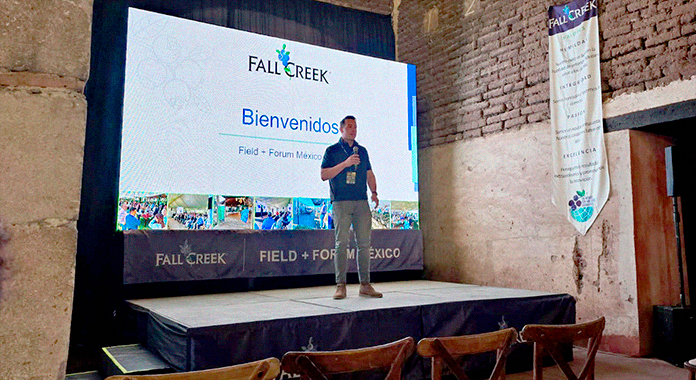
Cort Brazelton – President & CEO of Fall Creek

Mechanization and competitiveness
Beyond fruit quality, Brazelton introduces another factor that could raise the strategic relevance of this segment: mechanization.
“With the labor crisis and the relative compatibility of many high-refrigeration systems with mechanization, I believe that the blueberries High-refrigeration requirements could represent a much larger proportion of the global supply within the next 10 years.”
This statement incorporates a crucial factor for the future of the business. As labor costs rise in many producing countries, the ability to combine superior genetics with more mechanizable systems could significantly alter the global competitive landscape.
Therefore, Brazelton concludes with a warning directed at companies that operate in different geographies:
"Companies that operate in multiple geographies and do not have a high-chill strategy, access to the best high-chill genetics, and a mechanization plan should pay close attention."
A strategic variable
Genetics has historically been a tool for improvement. Today, it is beginning to play an even more crucial role. It is no longer just about yield, adaptation, or hardiness, but a strategic variable that influences the producer's profitability, the consumer experience, and the ability to compete in an increasingly demanding global market.
In this new stage, the companies that manage to combine genetics, access, management, logistics, and market intelligence will likely be the ones that capture the most value in the next phase of the global industry. blueberry.
ARTÍCULOS RELACIONADOS