South Pacific ports: Peru accelerates and Chile consolidates records in 2025
The performance of the Peruvian port system during 2025 confirmed a cycle of sustained expansion, driven by increased installed capacity and new investments. According to figures cited by the Peruvian Institute of Economics, the country's ports handled nearly 70 million metric tons, representing year-on-year growth of approximately 9%, in a context of increasing regional competition for cargo and logistics services on the Pacific coast.
This increase in port activity is explained by the structural role of ports in Peruvian foreign trade, especially for export sectors such as agribusiness and mining. The public and private agenda has emphasized terminal expansions, improved access, and strengthened connectivity, with the aim of reducing logistics costs and sustaining the dynamism of exports and imports.
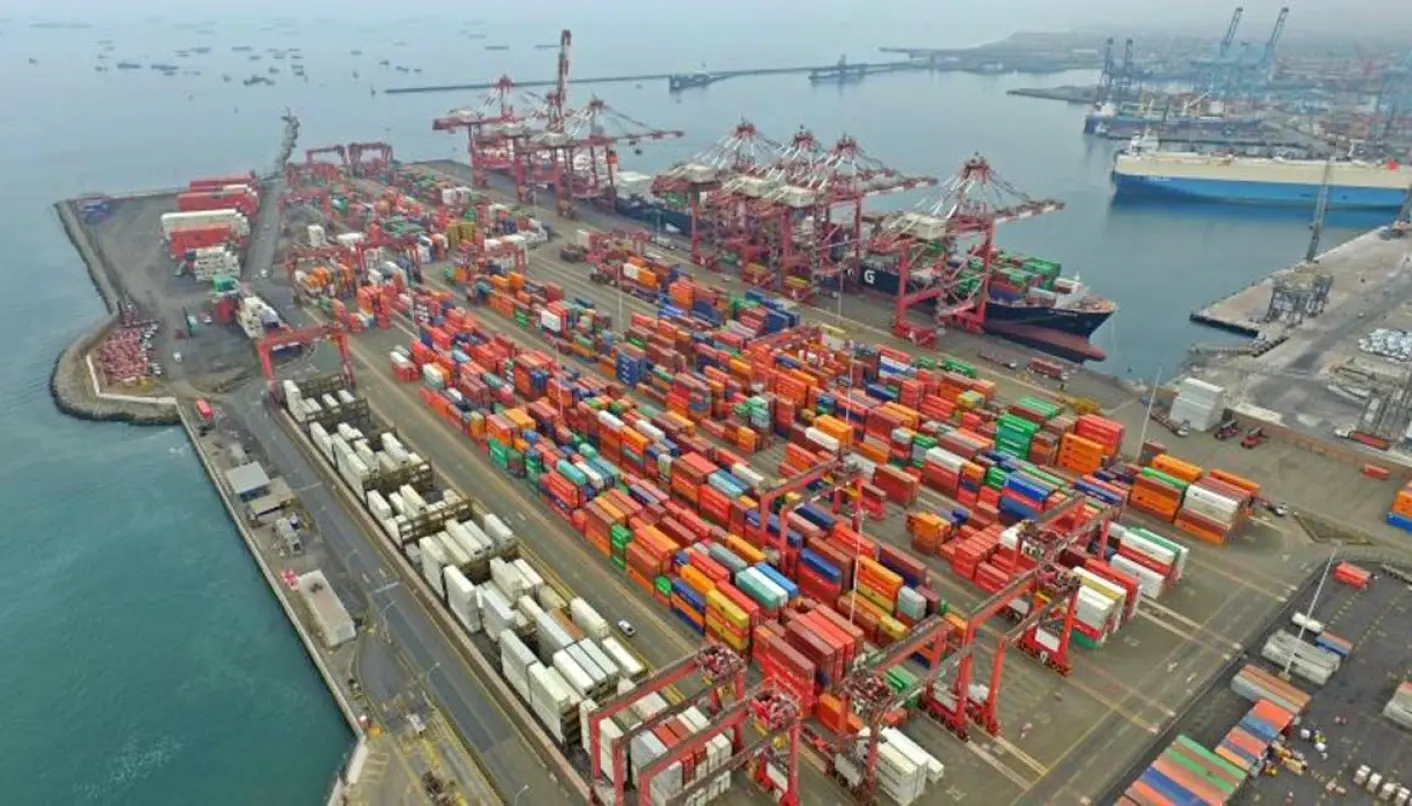
In this context, the Callao-Chancay corridor accounted for a significant portion of the growth. During 2025, the public terminals of the Port of Callao handled 3,3 million TEUs, an 8,1% increase compared to the previous year, according to the National Port Authority. DP World Callao led the operation with over 2,07 million TEUs, followed by APM Terminals Callao with 1,24 million, maintaining the country's main port as a central hub in the logistics chain.
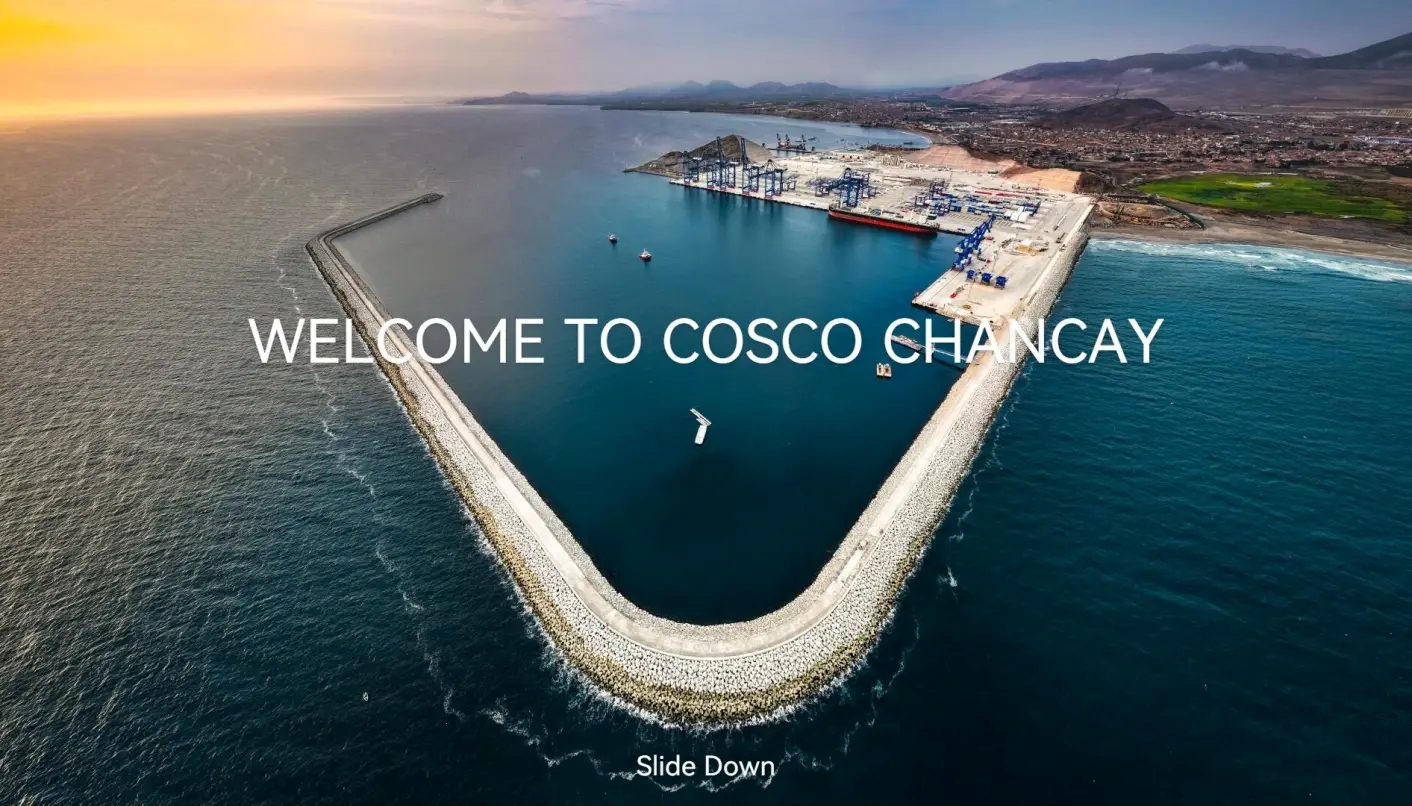
The Port Terminal of Chancay, meanwhile, consolidated its first year of operation with a significant impact on trade and revenue collection. According to SUNAT (Peru's tax and customs authority), the terminal generated approximately US$308 million in customs revenue in 2025, with 60% concentrated in the second half of the year. Vehicle imports led the flows, followed by bulk cargo and machinery, while the movement of 126.384 TEUs of transshipment reinforced its role as a regional platform, with containers in transit to markets such as Chile and Colombia.
Beyond the Lima metropolitan area, Peru has advanced a nationwide port development strategy. Projects in Marcona, with investments exceeding US$1.000 billion, and ongoing developments in Chimbote complement modernization efforts in Matarani, Salaverry, Paita, and Ilo. In the south, the port of Corío, in Arequipa, projects an estimated investment of US$7.000 billion in the medium and long term, linked to land and rail corridors, with a focus on transoceanic integration and strengthening the hinterland.
General containerized cargo reached 2.036.879 tons. © Cosco Chancay

A promising second half of the year in Chancay
The operational consolidation of the Port of Chancay began to be reflected more clearly during the second half of 2025. Between June and December, the terminal moved a total of 3.005.501 tons of cargo, demonstrating a rapid positioning within the Peruvian port system and a growing weight in the logistics flows linked to foreign trade.
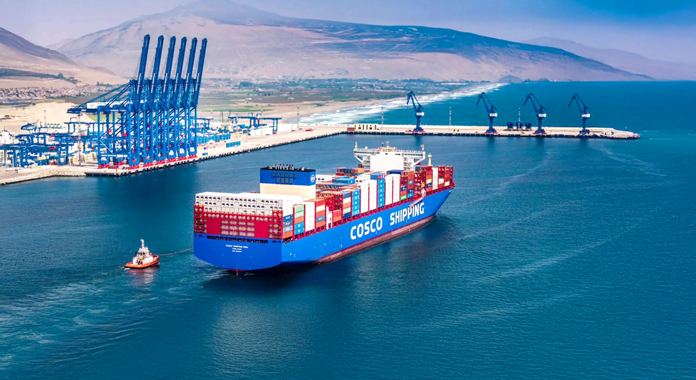
The cargo structure was characterized by the predominance of containers, which accounted for the majority of the transferred volume. According to information from the National Port Authority (APN), general containerized cargo reached 2.036.879 tons, consolidating its position as the main driver of activity at the terminal during the analyzed period.
In parallel, the port recorded significant operations in other types of cargo. Breakbulk cargo totaled 262.674 tons, while roll-on/roll-off cargo reached 54.549 tons. In the dry bulk segment, the volume handled reached 651.398 tons, reflecting a diversified operational matrix with the capacity to meet diverse market requirements.
The National Port Authority (APN) highlighted that these results are due to a combination of modern infrastructure, cutting-edge technology, and efficient operational management. Under the operation of Cosco Shipping Ports Chancay Peru, the terminal is progressing in its consolidation as a strategic player in the National Port System, with a direct impact on strengthening the country's logistics and connectivity.
Peruvian exports to China grew by 30% in 2025. © Peruvian Association of Maritime Agents

Chancay and the rise in exports in Peru
The opening of the Port of Chancay began to reshape the logistics landscape between Peru and Asia in 2025, with visible effects on foreign trade flows. The new infrastructure has improved the Andean nation's transpacific connectivity, facilitating a greater volume of shipments to China, Peru's main trading partner, within a context of export expansion.
According to Juan Carlos Paz, former president of the National Port Authority (APN), who spoke to the Peruvian press, the availability of a direct maritime connection to the Chinese market, with transit times of approximately 23 days, has strengthened the competitiveness of Peruvian exports. This logistical advantage has translated into reduced costs and greater predictability for exporters, especially for time-sensitive cargo.
Official figures support this trend. According to the Ministry of Foreign Trade and Tourism (Mincetur), Peruvian exports to China grew by 30% in 2025, accounting for 36,2% of total exports. Meanwhile, the country's total exports reached US$90.082 billion, a 21% year-on-year increase, positioning Peru as one of the leading exporters in Latin America and the Americas.
During its first period of operation, between June and December 2025, the Port of Chancay handled 336.200 TEUs, with dynamic performance in both imports and exports. The highest volumes of declarations were recorded in the second half of the year, reflecting the terminal's rapid adoption by logistics and foreign trade operators, despite it being only a partial year of operation.
From a sectoral perspective, the infrastructure has particularly benefited the Asian-oriented agribusiness sector, including products such as blueberries, avocados, asparagus, and citrus fruits, as well as frozen seafood and manufactured goods. This is further enhanced by its impact on customs revenue and regional transshipment, solidifying Chancay as a strategic hub that complements Callao and positions Peru as a logistics platform for the South American Pacific.
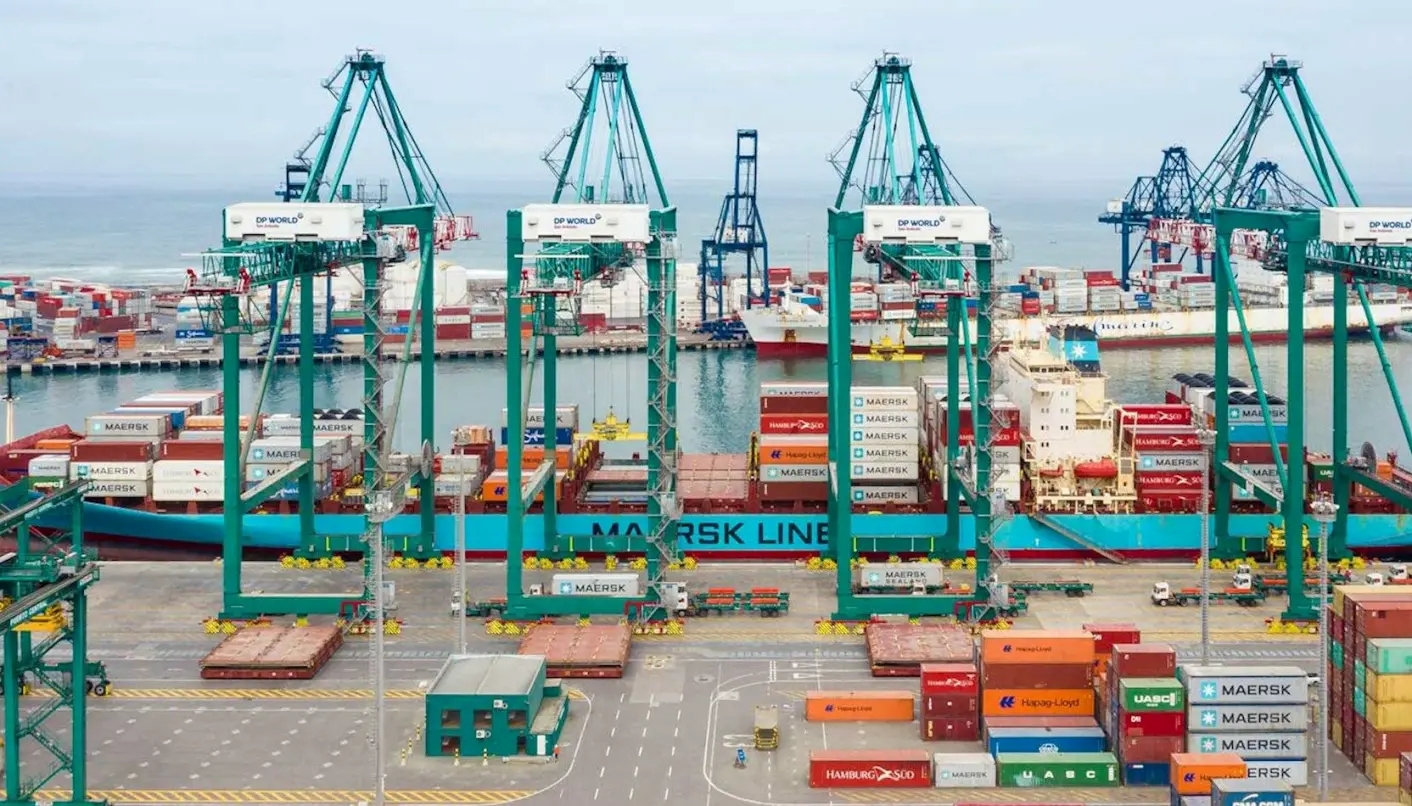
The port system of San Antonio handled 23.855.311 tons. © DP World San Antonio
The numbers for the Port of San Antonio
Meanwhile, in Chile, the country's main port terminal, San Antonio, closed 2025 with a record-breaking container throughput, surpassing 2 million TEUs in a single year for the first time. Total traffic reached 2.060.244 units, representing a 14% year-on-year increase and solidifying the complex's position as the country's leading container port hub, amidst increased demand from foreign trade.
The result was sustained by the joint operation of its concessioned terminals. San Antonio Terminal Internacional handled approximately 59% of the total TEUs moved, while DP World accounted for the remaining 41%, allowing for operational continuity and high productivity levels throughout the year.
In terms of total cargo, the San Antonio port system handled 23.855.311 tons in 2025, representing a 3% increase over the previous year. The distribution across terminals showed a diversified structure, with STI contributing 45% of the volume, DP World 40%, Puerto Panul 14%, and QC Policarpo Toro 1%.
Monthly activity again showed a strong concentration towards the end of the year. December registered the highest level of activity, with 2.335.785 tons transferred, reflecting the seasonality of import and export flows and putting pressure on port operations and land access to the country's main logistics hub.
By cargo type, containers led the way with 18.199.722 tons, a 3% increase. Breakbulk cargo grew 23% to 544.522 tons, and vehicle transfers reached 265.774 units, a 15% increase. In contrast, liquid bulk cargo declined 5%, while solid bulk cargo remained stable, reinforcing the trend toward operations increasingly focused on containerized and higher-value cargo.
ARTÍCULOS RELACIONADOS