Peru opens its doors to the bumblebee Bombus atratus
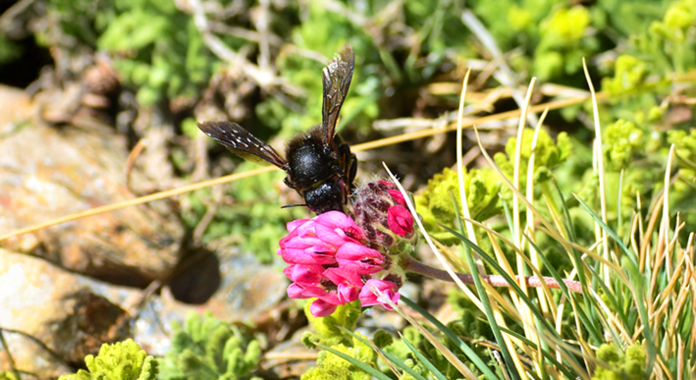
In a strategic step for the sector, the National Agrarian Health Service (SENASA) officially established on January 21 the sanitary requirements for the importation of commercial beehives. Bombus atratus originating from Argentina. The measure seeks to strengthen pollination in key crops, under a strict regulatory framework that safeguards the health and balance of the local ecosystem.
A strict regulatory framework
The legal framework is contained in Directoral Resolution No. D000004-2026-MIDAGRI-SENASA-DSA, published in the official gazette El Peruano. In it, the health authority establishes a rigorous protocol to ensure that the introduction of these bumblebees does not compromise animal health or the environment. Among the most relevant points are:
- Certificate of originShipments must be accompanied by an official health certificate issued by the competent authority of Argentina.
- Traceability of beehivesThey must come from a stable breeding stock, with queens born and raised in confinement.
- Absence of diseases and pests of sanitary importanceThe beehives must come from establishments that have not had recent cases of Locustacarus buchneri, Apicystis bombi, Sphaerularia bombi, Deformed Wing Virus (DWV), Sacbrood Virus (SCV), Black Queen Cell Virus (BQCV), Israeli Acute Paralysis Virus (IAPV) and nosemosis, among other agents.
- Authorized establishments: Beehives may only be exported from establishments registered and authorized by the official veterinary service of the Argentine Republic.
- Official pre-shipment inspectionHives and packaging must be inspected individually by an official or authorized veterinarian, verifying the absence of Aethina tumida (small hive beetle) in any of its states.
- Biosecurity in transportThe material used for transport must be new, for first use, sealed and without previous contact with bees or bumblebees.
In addition, commercial beehives must undergo a post-entry quarantine, remaining in facilities previously inspected and authorized by SENASA. There, they will be subject to the sanitary measures established by the authority, for a minimum period of 20 days or until they obtain negative test results. nosemosis y Aethina tumida.

Biological safety and risk control
The regulations place special emphasis on biosafety and preventing risks associated with the introduction of managed species from outside their natural distribution range. To this end, SENASA requires importers to have a valid registration and a designated technical officer to supervise the handling of biological material in the field.
With this opening, Peru not only strengthens its trade ties with Argentina, but also incorporates a high-value biotechnological tool to improve pollination efficiency in strategic crops.
Impact on the agricultural sector
The choice of Bombus atratus This is not by chance. Unlike the honeybee (Apis mellifera), bumblebees are particularly effective pollinators in variable climatic conditions and in crops with deep-corolla flowers.
El Bombus atratus It is notable for its ability to perform buzz pollination: the bumblebee vibrates its thoracic muscles at a specific frequency, causing the anthers of flowers such as blueberries or tomatoes to release large quantities of pollen. This behavior improves fruit set and uniformity.
Furthermore, the bumblebee maintains its activity in adverse conditions where the common honeybee usually reduces or stops its work: stronger winds, cloudy skies, or low temperatures. This allows it to make better use of the flowering window and reduce the risk of losses due to unfavorable weather conditions.

What makes Bombus different from bees?
In a Interview published by Blueberries ConsultingPatricia Estay, an agricultural engineer and M.Sc. in Entomology from the Agricultural Research Institute (INIA) of Chile, highlighted several advantages of the bumblebee over the honeybee.
According to Estay, the bumblebee:
- It can withstand temperatures close to 1°C, so it can start working very early and finish later, whereas bees require temperatures above 14°C;
- It does not communicate through dances like the bee, so it repeatedly returns to the same source of nectar and pollen, increasing efficiency on the target crop;
- It has a large, hairy body, which makes it an excellent pollen carrier;
- It pollinates two or three times more flowers per minute than a bee;
- It adapts very well to indoor systems (tunnels, greenhouses, nets), where bees are often disoriented by diffuse light;
- It withstands wind speeds of up to 70 km/h.
However, the researcher emphasizes that the use of one species does not exclude the other: “all the studies and research we have done, comparing the application of Bombus And the interaction between bees and pollinators shows that the best management approach is the joint work of both insects. They complement and enhance each other very well, both in crops grown in tunnels and outdoors.”
An opportunity for entomology applied to agriculture
The authorization for the import of Bombus atratus from Argentina opens a significant window for entomology applied to agriculture in Peru. The availability of commercial bumblebees expands the range of management tools for producers, especially in crops that depend heavily on efficient and consistent pollination.
Provided that strict sanitary control and responsible field management are maintained, this new biotechnological tool can contribute to improving yields, productive stability and fruit quality, strengthening a Peruvian agricultural industry that continues to expand.
Previous article
"Sekoya varieties debut in the Indian blueberry harvest"ARTÍCULOS RELACIONADOS