Wood diseases and their impact on blueberry cultivation
Wood diseases are a major problem in blueberry cultivation. Caused primarily by fungi, these diseases can cause branch dieback, cankers, and, in severe cases, the plant itself.
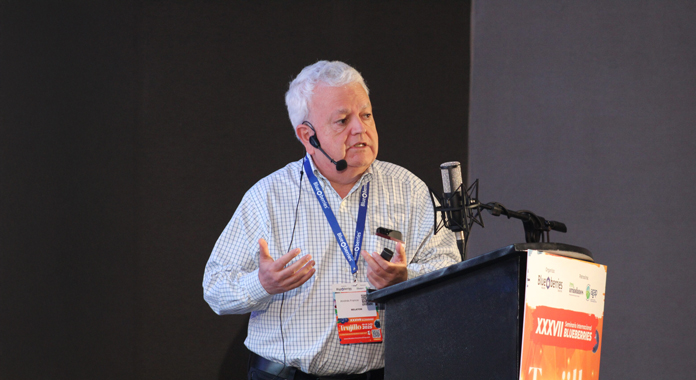
To address this issue, the conference was held “Wood diseases and the importance of Lasiodiplodia in blueberry cultivation”, by the phytopathologist Andres France, international consultant who presented at the XXXVII International Seminar Blueberries Trujillo 2025 by Blueberries Consulting.
Wood diseases can affect the health and productivity of blueberry bushes, so it is important to address this problem through prevention.

Growing problem
Dr. France noted that wood diseases are a significant and growing problem, with higher nitrogen levels and rising temperatures being the main causes of fungal growth in plants.
Management is difficult because the pathogen is hidden within the plant and the main way it enters is through pruning.
In this sense, the way to prevent these diseases is to eliminate the sources of inoculum and protect the wounds in the wood.
some considerations
The initial symptoms of wood diseases are barely visible. These diseases develop slowly, some with cycles that can last several years. They are present throughout the life of the orchard.
They are pathogens that grow on the bark or deep within the stem, protected from the environment and competition from microorganisms.
Orchards with the highest levels of fertilization are the most susceptible, and pruning is the main source of income.
Climate changes, with higher temperatures and prolonged periods of drought, are factors that favor its development.

Main wood diseases
Among the main wood diseases are: stem canker, stem blight, anthracnose, dieback, neck canker, yellow wood rot, Botrytis blight, silver blight and bacterial blight.
The most common hosts: Cocoa, blueberries, mango, kiwi, citrus, pineapple, pear, lemon, banana, apple, etc.
Spore viability
In water, up to 12 months at room temperature. In soil, up to 6 months at room temperature. In plant tissues, up to 3 months in leaves and stems.
Factors affecting spore survival: low temperatures, high humidity, and darkness.
Wood Disease Management
Dr. France offered some recommendations for managing wood diseases. First and foremost, is the identification of this group of diseases.
Next, we must act by eliminating sources of inoculum, performing sanitary pruning, avoiding wounds during periods of inoculum flight, and protecting pruning wounds (spraying).
He also noted that chemical or biological pastes (Trichoderma and Bacillus) can be used, along with sap-thinning management, resistance stimulants, and chemical and organic fungicides.

Highly effective fungicides
Carboxamides: benodanil, boscalid, carboxin, fluopyram, flutalonil, fluxapyroxad, isofetamid and penthiopyrad.
Triazoles: cyproconazole, difenoconazode, fenbucanazode, metconazole, procholoraz, propiconazole, tebuconazole and tetraconazole.
Strobilurins: azoxystrobin, ciprodnil, kresoxim-methyl, pyraclostrobin and trifloxystrobin.
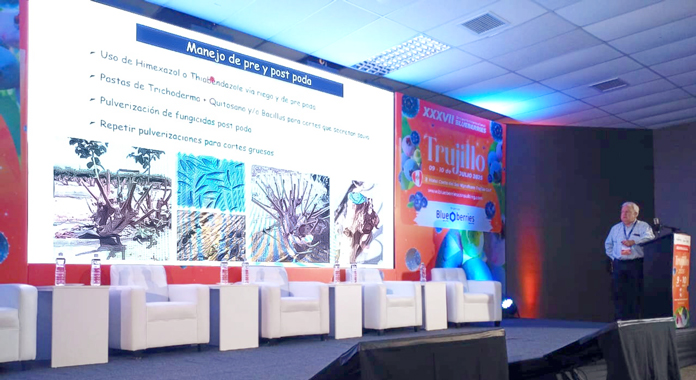
Photography Blueberries Consulting - Mr. Andrés France, Agricultural Engineer, M.Sc., Ph.D., Plant Pathologist, INIA Researcher, International Consultant
Continue on World Blueberry Tour el Wednesday September 10 ’s relationship with the 2025th International Seminar on Red Fruits, Morocco XNUMX and technical tour where we will visit production fields in the North of the country Thursday, September 11.
Ask about available STANDS and SPONSORSHIPS HERE
Get your ticket to the MOROCCO SEMINAR and TECHNICAL TOUR HERE
ARTÍCULOS RELACIONADOS