Chilean blueberry industry: signs of adjustment and repositioning in the global market
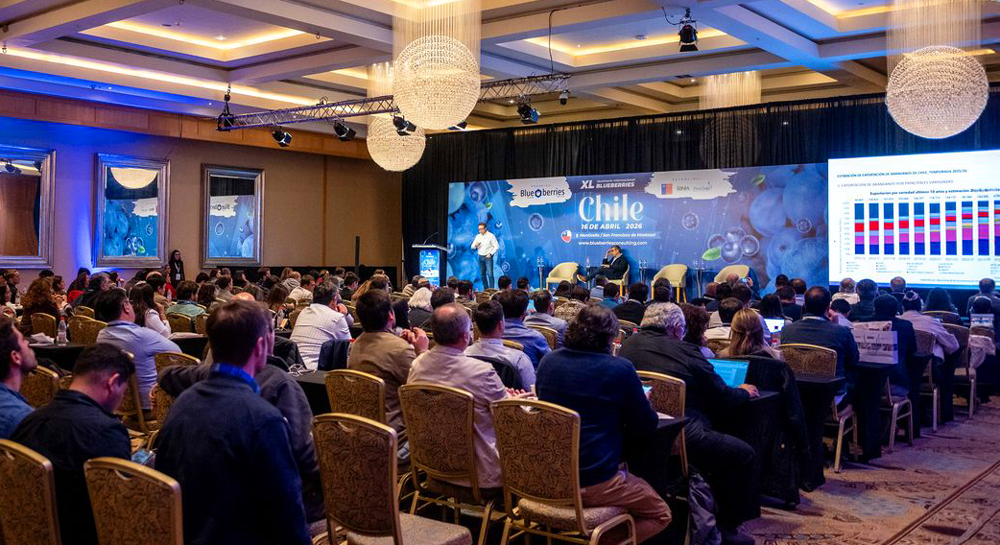
The high turnout of XL International Blueberry SeminarThe event, held in Monticello on April 16, reflected the interest of the Chilean industry in blueberry to review its current position and project its future in a more competitive global scenario. Producers, exporters, specialists, and representatives of companies linked to the sector agreed on a shared diagnosis: Chile is facing a stage of transformation that demands more precise decisions and a greater capacity for adaptation.
In that context, the meeting offered a glimmer of optimism, though far from any triumphalism. New genetics, more precise agronomic practices, and greater discipline to ensure market consistency now appear as key factors for regaining competitiveness in an industry that no longer competes on the same terms as a decade ago.
A different market
The rapid expansion of previous years is over. The business of blueberry It has entered a stage of consolidation, in which productive efficiency, fruit quality and responsiveness to new commercial demands define the competitiveness of exporting countries.
This shift in the landscape was one of the central themes of the seminar's initial session, which focused on the industry's commercial factors. The discussion was frank, acknowledging mistakes, appreciating the strengths of the competition, and offering an optimistic outlook regarding the growth of global demand and the opportunities that still lie ahead for Chilean fruit.
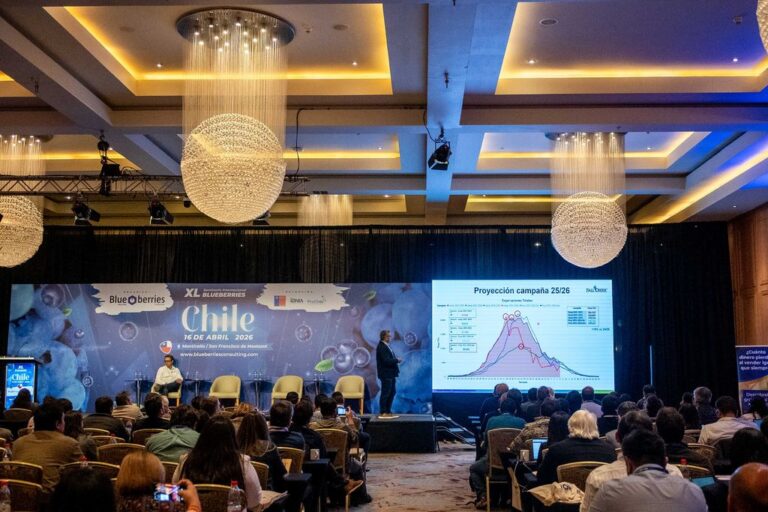
XL International Blueberry Seminar Chile 2026 © Blueberries Consulting

Reposition yourself decisively
At the end of that first segment, Andres Armstrong, executive director of Cranberry Committee of ChileHe reinforced the idea that the Chilean industry is going through an adjustment process that could open a stage of recovery, provided that it moves quickly and consistently in the challenges that currently condition its performance.
Armstrong recalled that a decade ago the industry projected volumes of between 100 and 150 tons, but then lost ground in both volume and quality. In that context, he noted that in the last two years this trend has begun to reverse, with exports projected to reach 92 tons in 2026.
He also highlighted the sustained growth of the frozen food segment, which reached 70 tons in the last campaign, with attractive economic returns, consolidating itself as a relevant complement within the business.
“I also want to acknowledge the persistence of Blueberries Consulting, which, despite organizing many of these events around the world and in the most important countries for the industry, has never stopped supporting the Chilean industry.”Armstrong declared.
The executive summarized his vision in one idea that permeated much of the day:
“Chile has a real opportunity to reposition its blueberryBut that goal will depend on the speed and consistency with which it progresses in varietal replacement, quality, logistics, and market access.”

Andrés Armstrong, Executive Director of the Chilean Blueberry Committee. XL International Blueberries Seminar Chile 2026 © Blueberries Consulting

The most “athletic”
Another intervention that marked the meeting was that of Pilar Bathed de Hortifrut, who summarized the new scenario with an eloquent image. “Besides varietal replacement and proper agronomic management, I believe the most athletic ones should remain.”He noted, referring to the producers and companies with the greatest capacity for adaptation and agility to respond to the new conditions of the global market.
His approach resonated with a widely shared perception at the seminar: the current scenario demands much more than export experience. Today, timely decisions, greater flexibility, and a deeper understanding of the technical and commercial demands of the market are essential.
In this context, the stabilization and even reduction in volumes observed in recent seasons can also be interpreted as part of a structural adjustment process, in which the industry seeks to redefine its position in the face of more intense and specialized competition.
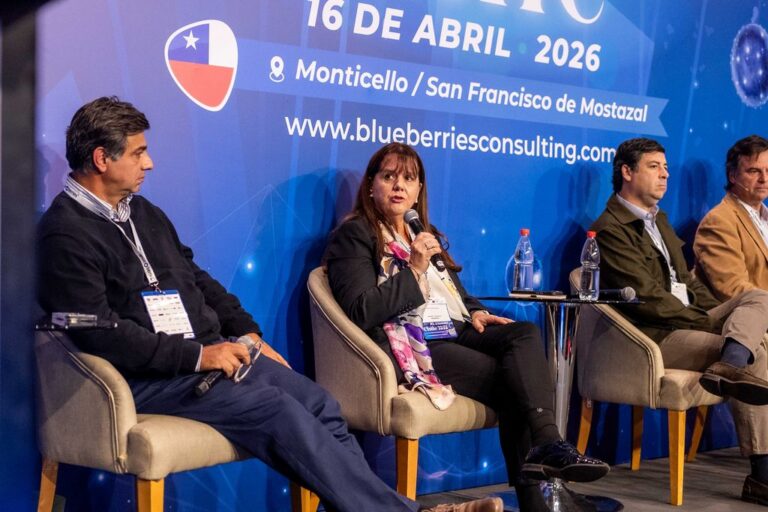
Pilar Bañados of Hortifrut XL International Blueberry Seminar Chile 2026 © Blueberries Consulting
Quality is built from the beginning
The subsequent technical presentations reinforced this interpretation from another perspective. Throughout the program, topics such as root system management in soil and containers, the importance of understanding plant physiology, common errors in the nutrition of new varieties, and the need for further research during crucial stages of cultivation were addressed.
The technical message was consistent on one central point: the final quality of the fruit is not corrected at the end of the process, but is built from the beginning and sustained in each of the production and post-harvest phases. “Quality is not corrected at the end of the process, it is built throughout the entire production cycle.”, was one of the ideas that best summarized that approach.

Costs, logistics and competition
Despite signs of recovery, structural challenges remain significant. Chile faces higher production costs and longer transit times to its main markets, increasing pressure on logistics and post-harvest handling. At the same time, competitors like Peru and Mexico have raised the bar in terms of arrival condition, consistency, and market opportunity.
Added to this is increasing market transparency. The availability of real-time information, price monitoring, and traceability are increasingly reducing the margins for inefficiency, meaning that commercial and production decisions now have much more immediate consequences.
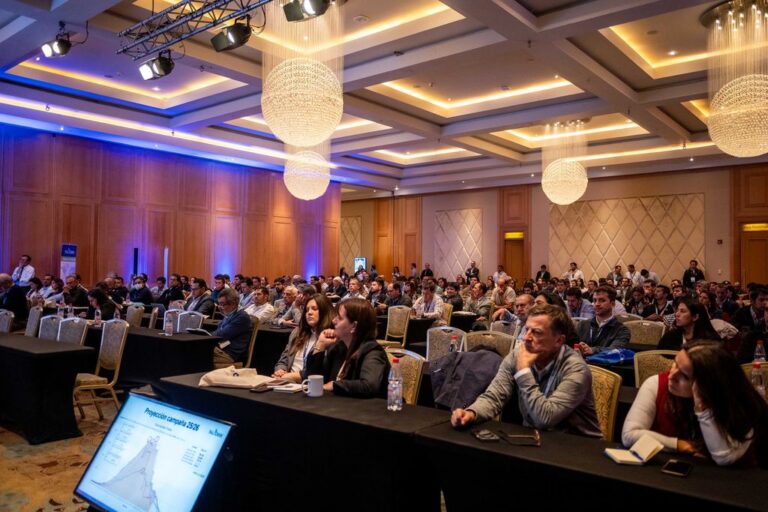
XL International Blueberry Seminar Chile 2026 © Blueberries Consulting
Recover position
Chile remains a relevant player in the global industry of blueberry. It has technical expertise, export experience, and an industry that has demonstrated adaptability. However, that alone is no longer enough.
The business of blueberry Chile has entered a stage where sophistication is no longer optional. Recovering Chile's market position doesn't depend on returning to past production volumes, but rather on consolidating a model based on quality, efficiency, and differentiation.
The Chilean industry is currently undergoing a process of adjustment, but also of redefinition. In a more competitive, better-informed, and faster-paced market, the difference between remaining relevant and losing ground comes down to the details. And those details begin long before the fruit reaches the consumer.
More news about the International Blueberries Seminar Chile 2026:
Stands, meetings and technical conversation: the value of networking at Blueberries Chile 2026
Market, genetics and global competition: the signs for the Chilean blueberry business
Andrés Armstrong: “The Chilean blueberry industry is undergoing a transformation process”
Women in agriculture bring a key perspective to the new challenges of blueberries
Check out the summary of the XL International Blueberries Seminar Chile 2026 on our YouTube channel Blueberries TV
ARTÍCULOS RELACIONADOS