Blueberry packaging: new requirements starting in August in the European Union
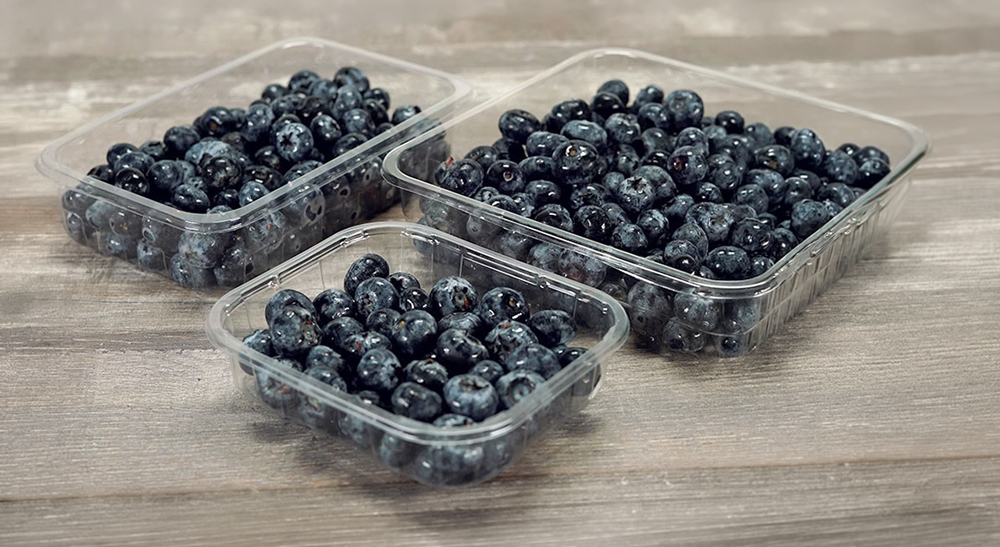
Packaging purchased before August is not automatically approved for future shipments to the European Union. If it will be used after August 12, 2026, companies must verify that it meets the new requirements and have sufficient documentation to prove compliance.
That day will mark the general application of the Packaging and Packaging Waste Regulation (PPWR). Among its initial provisions are limits for PFAS in packaging intended to come into contact with food.
The restriction on certain single-use plastic containers for pre-packaged fresh fruits and vegetables in quantities less than 1,5 kg corresponds to a later stage, planned for 2030. For now, the priority for the blueberry supply chain is to identify which materials will pass the August deadline, what support exists, and who will be responsible for them.
Three dates for the blueberry supply chain
- August 12, 2026: Review PFAS, inventories, and documentation of packaging.
- February 12, 2027: Follow the guidelines on formats and possible exceptions.
- January 1, 2030Prepare for the restriction of certain plastic containers under 1,5 kg.
The PPWR applies to the European Union market and should not be automatically extrapolated to the United Kingdom, Switzerland or other European destinations outside the EU.

Inventories must be reviewed now
The European Commission clarified that there is no general timeframe for depleting existing stocks exceeding the PFAS limits. Food packaging placed on the European Union market after August 12 must comply with the new limits, even if it was manufactured before that date. Packaging already on the market before that date may remain there.
Therefore, the purchase date alone is not enough to determine whether a material can be used. In certain formats, filling and sealing can also influence when the packaging is considered to have been placed on the market.
For programs that will use packaging after August 12, the exporter should confirm in writing with the importer what documentation will be required. The initial review should focus on the formats assigned to those programs and the available packing inventory.

What the supplier must demonstrate
Control is not limited to the visible body of the punnet-type container. It can also involve the lid or sealing film, labels, inks, adhesives, and coatings incorporated into the system.
The main question is: Does the document cover the entire container or only the resin from which it was manufactured?
The backup should identify, at a minimum:
- the exact format code;
- the components and formulation included;
- compliance with PFAS limits;
- the validity of the document;
- the procedure for reporting changes in composition.
A generic statement such as "PFAS-free" may not be sufficient if it does not specify which material was assessed and which product it refers to. The Commission also acknowledges that there is still no single, harmonized method for monitoring limits and recommends a phased verification procedure.
Switching from plastic to paper or cardboard does not automatically resolve compliance if the new system incorporates coatings, adhesives, or inks subject to review.

The buyer can demand more
Compliance with the PPWR does not, by itself, guarantee customer approval. The importer or retailer may request additional documentation, their own testing, or specific approval for each packaging code.
Responsibility can also change depending on who defines the format, under what brand it is marketed. blueberry and where the packaging or repackaging takes place. Working under the exporter's brand, within a private label program, or with fruit shipped in bulk to be repackaged in the European Union is not the same.
Each transaction must clearly define who selects the packaging, maintains the records, reports changes in composition, and is responsible to the buyer. These responsibilities should be reflected in the program specifications and contracts.
Insufficient documentation can delay format approval, force inventory replacement, or lead to renegotiation with the client. PPWR is not just a matter of quality or sustainability; it can also impact costs and business continuity.
The format change will arrive in 2030
From 1 January 2030, the PPWR will restrict certain single-use plastic packaging for fresh, unprocessed, pre-packaged fruit and vegetables in quantities under 1,5 kg. The category includes several common formats of blueberry.
El blueberry It does not currently have an automatic exclusion. To support these definitions, EFSA is evaluating information on current packaging, alternatives, and the effects of replacing them on the deterioration and physical damage of fresh produce.
Read also:
- Few gateways, different import networks: this is how Peruvian blueberries are distributed at their destination
- Active packaging aims to improve the transport of blueberries, reducing losses and extending their shelf life.
- Packaging 2.0: they invent hydrogel that delays fruit rot
- International Blueberry Seminars 2026: Blueberries travel through Peru, Chile, Mexico, Morocco and China
ARTÍCULOS RELACIONADOS