The Port of Malaga boosts its international connectivity with companies from Chile and Peru
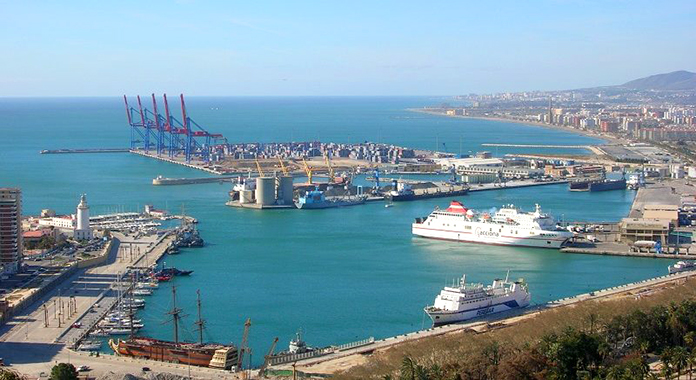
The Port of Malaga has launched an offensive to strengthen its international connectivity through direct commercial action with companies from Peru and Chile, consolidating its profile as a strategic enclave for the traffic of fruit and vegetable products from Latin America to Europe.
According to information from the Port Authority of Malaga itself, the institutional and business mission, carried out between March 8 and 18, seeks to position this Andalusian venue as a preferred gateway for Latin American exporters.
During the mission, the Malaga delegation, accompanied by Noatum Terminal Malaga, the Malagaport Foundation and ICEX, carried out an agenda that included meetings in Lima with representatives of the Peruvian agri-food sector interested in diversifying maritime routes to Europe.
The President of the Port Authority, Carlos Rubio Basabe, emphasized: “The importance of the network of contacts established in these trade missions has allowed us to showcase the opportunities of the Port of Malaga for both importers and exporters, especially due to the efficiency and personalized attention offered to all operators.”
Furthermore, Rubio Basabe expressed his gratitude for the institutional support: “The participation of ICEX has been of great help in this mission, and in particular, the support of the Ambassador of Spain in Lima, Mr. Alejandro Abellán.”
Agricultural export sector
For the third consecutive year, the Malaga delegation strengthened its relationship with the Peruvian agricultural export sector, highlighting that traffic between Peru and Malaga grew by 45% in 2025 compared to the previous year.
Among the main products exported by Peru to Spain are avocados, grapes, asparagus, artichokes, mangoes and onions, goods whose movement has increased thanks to the specialization of Malaga companies in the preparation and ripening of Latin American fruit.
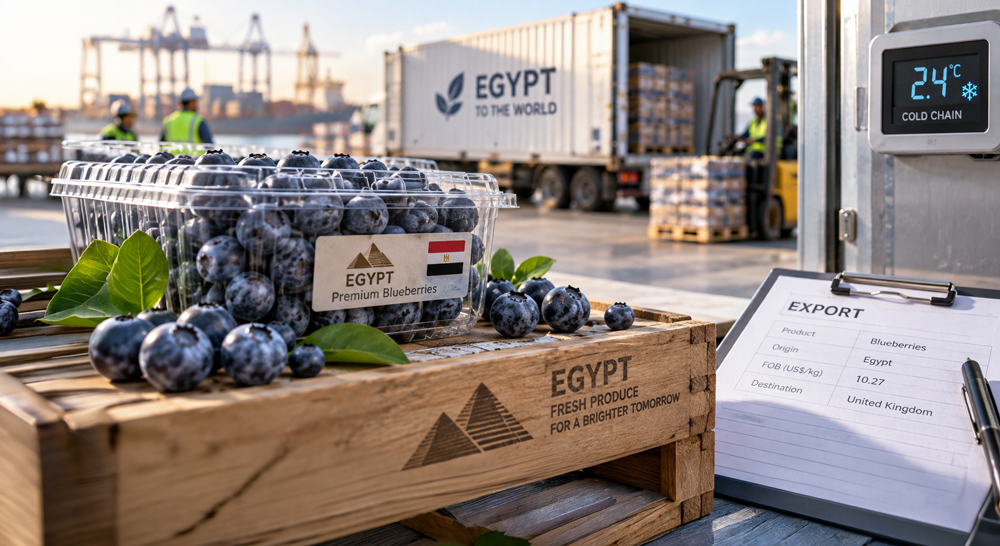
During the visit, the delegation was received by the Spanish ambassador to Peru, Alejandro Abellán, who convened the directors of business associations to analyze logistical and commercial opportunities. The director of the Port Authority, Jose Moyano, intervened in the XXXIX International Blueberry Seminar Lima 2026highlighting the role of maritime logistics and refrigerated cargo management in increasing the competitiveness of agricultural exports.

José Moyano on the panel “How does logistical efficiency redefine cost and competitiveness from the source?”. International Blueberries Seminar Lima 2026

First steps in Chile
The year 2026 also marks the beginning of the Port of Malaga's commercial activity in Chile, a country where the delegation has established the first contacts with international companies and shipping lines, thus expanding its scope of action in the South American continent.
Malaga's commercial strategy is based on its positioning as a boutique port in southern Europe, a category reserved for medium-sized port facilities that offer personalized and high-quality logistics services.
The site benefits from a geostrategic location at the crossroads of Atlantic and Mediterranean routes, and guarantees 24-hour operability throughout the year, thanks to favorable weather conditions.
The facility has 42.000 square meters of storage, 723 meters of dock line, a draft of up to 16 meters and 1.200 connections for refrigerated containers, ensuring efficiency in the handling of perishable products.
Among the specialized services, Reefer Fast Track stands out, which optimizes the access of refrigerated containers, and the Border Inspection Point, operational every day of the week, designed to facilitate logistics processes and shorten transit times.
Refrigerated container traffic showed significant growth: 4.300 units were handled in 2025, compared to 3.027 the previous year, consolidating the port's position as a key player in the fruit and vegetable sector. This increase is accompanied by a rise in slot capacity for maritime services connecting Malaga with Latin America.

Sustained growth
The Port of Malaga has been ranked as the fastest-growing port in the Spanish port system for the second year running, according to the Port Authority itself. In 2025, the port achieved a growth of 24,3%, with a total traffic of 5.615.007 tons. The previous year, growth was 76,4%, with 4.514.921 tons handled.
President Carlos Rubio highlighted the progressive increase in solid bulk cargo, a vital sector for local businesses, particularly due to imports of grains and animal feed. Although a slight decrease in these imports was recorded in 2025, the institution explained that this was due to increased domestic agricultural production following a period of higher rainfall.
In the export sector, the port has boosted mineral traffic, especially dolomite from the mines of Coín. Vehicle transport has also been strengthened, reaching 109.797 units in 2025, a 26,9% increase compared to the 86.446 in 2024. The port distributes vehicles throughout southern Spain and southern Portugal, with brands such as Renault, Dacia, Toyota, Mitsubishi, and BYD.
The Málaga-Melilla ferry service recorded 365.503 passengers and 82.891 vehicles in 2025. “These figures make the port a key destination for Melilla residents traveling to the mainland by sea,” stated Carlos Rubio.
Traffic surge
Container traffic has consolidated itself as the engine of growth for the port in 2025, with an increase of 51,3% compared to 2024. In terms of tonnage, 3.891.420 tons were moved, driven by a growth of 138,3% in exports.
Rubio emphasized: “The Port of Malaga is the fastest growing in connectivity in the world,” adding: “We have the privilege of being directly connected to practically the entire world.”
The international connectivity of the port has been strengthened with agreements with shipping lines such as MSC Dragon, which links Malaga with the Far East, China and Korea; Himalaya Express, with India and Saudi Arabia; Emusa, with the United States; West Med Suez, with Brazil; Canada Express, with Canada; Intra Spain, with Morocco and Valencia; and the MSV line of Havajo, which connects with Chile, Peru, Colombia and Costa Rica.
In the cruise segment, Malaga has registered an increase of 21,3% in passengers and 19% in port calls, with a total of 570.481 passengers in 2025, consolidating itself as one of the main ports in southern Spain.

Investments and digitization
The director of the public body, José Moyano, indicated that in the last two years the Port Authority has made progress in the digital integration of all processes, both administrative and operational, highlighting the implementation of the new Electronic Headquarters and the digitization of port operations.
Regarding investments, the creation of the New Border Control Post was announced, which will have an investment of 6 million euros and will facilitate the inspection and control of goods from third countries.
Furthermore, the port has carried out its first liquefied natural gas (LNG) refueling operation on a cargo ship, a measure aimed at reducing emissions from port activity. “The commitment remains very clear,” stated Moyano, who also explained that the goal is to minimize days with poor air quality, a figure that dropped to just four days in 2025.
In the area of ethics and compliance, Moyano mentioned the implementation of a reporting channel, risk matrices, the creation of the Compliance Committee, staff training and the updating of the Code of Ethics, along with reinforced financial control policies.
Economic impact
The Port of Malaga closed 2025 with operating revenues of €21,9 million and a profit of €6,8 million. Revenue sources included cruise ships (23,1%), dry bulk cargo (12,8%), containers (12,4%), regular shipping lines to North Africa (11,4%), recreational boating (10,2%), the city port (10,1%), vehicles under freight regulation (4,5%), liquid bulk cargo (2,3%), and other sources (13,2%).
According to the Port Authority of Malaga, attracting new international traffic and improving connectivity reinforce the port's role as a logistical and economic engine for southern Europe.
ARTÍCULOS RELACIONADOS