China continues to invest heavily in agriculture in South America
This is a low-profile process that has been underway for years and is not yet over. Moreover, it will likely intensify. China is moving through the developing world, building networks for the future, especially in the agricultural sector. It is investing billions in Latin America, transforming the ports in this part of the world, and restructuring grain routes to Asia. This means that the pressure on American farmers grows with each new growing season.
According to Investigate Midwest, the Asian giant has invested in more than 23 seaports in Latin America, building a logistics network to boost its growing trade with the region. These investments range from multi-million dollar deep-water terminals to smaller upgrades that optimize rail connections, storage capacity, and vessel transit times.
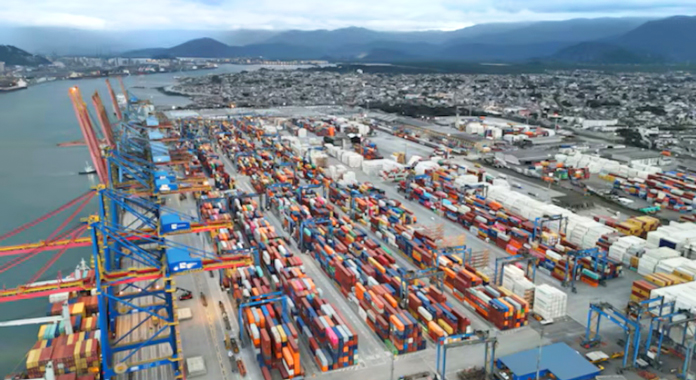
Brazil has become China's main supplier of soybeans. It's the chosen one, without a doubt. One of the most strategic port investments made by the Asian company is located in the Port of Santos, on Brazil's southeastern coast. There, the Chinese state-owned company COFCO International consolidated its presence after obtaining a concession in 2022 to modernize and expand the STS11 agricultural terminal. This port handles almost 25% of the country's soybean exports. China is the port's main trading partner, serving as both the origin and destination of its cargo flows.

American giants like Archer Daniels Midland, Bunge, and Cargill reigned supreme at this port for years, but more recently they have had to share the space with the Chinese state-owned conglomerate, which has invested around $285 million in recent years. The expansion will transform Santos into the world's largest dry bulk cargo terminal.
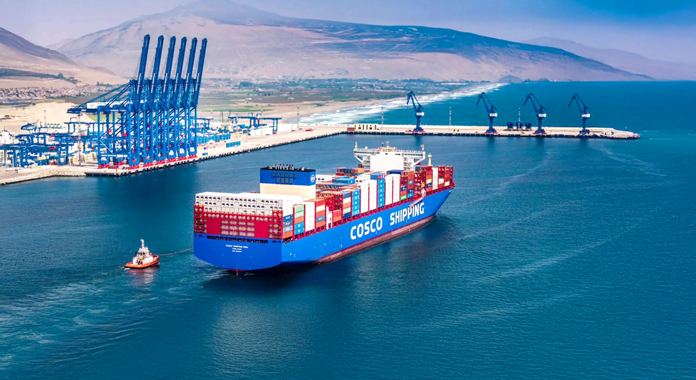
Meanwhile, on Peru's Pacific coast, Beijing has set its sights on the Port of Chancay. Developed by another Chinese state-owned company, COSCO Shipping, the project involves a $3.540 billion investment for its second phase. The promise behind such a large sum is that ships will reach China more quickly, a crucial advantage for agricultural products. Experts believe it will reduce maritime transit time to 23 days and logistics costs by at least 20% compared to other ports in the Americas.
Chancay is designed to receive the world's largest container ships. It could handle copper and blueberries from Peru, as well as soybeans from Brazil, among other commodities. The first phase delivered 15 berths, logistics facilities, and a 1,8-kilometer tunnel, allowing cargo to be channeled directly to nearby highways. Recognized as South America's first smart and automated port, it is expected to become the third largest port in the region once the second phase is completed, around 2035.
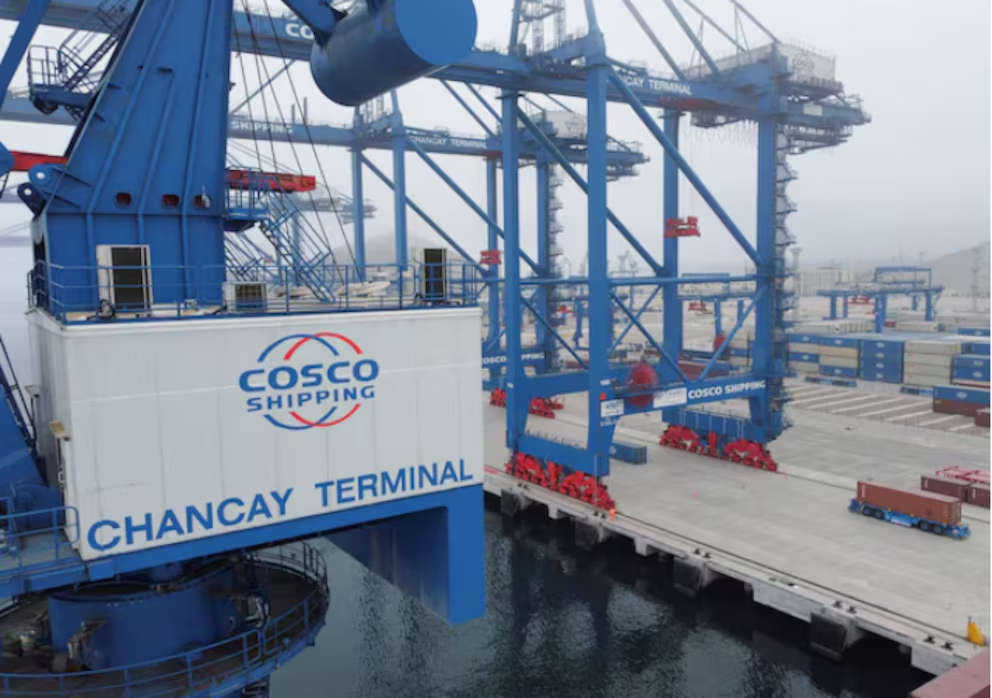
Port of Chancay, in Peru. With it, China increases its capacity to unload its goods in South America and ship those it imports from this region (Reuters)
It is clear that China is committed to sourcing more agricultural products from Latin America, while gradually abandoning the United States as a major supplier. It has come to this part of the world to stay, according to a renowned researcher: “Ports, railways, highways, bridges, subway lines, energy, and power plants are probably the best signs. These are long-term projects.”

An economist with the American Farm Bureau Federation says that when a country gains control of ports that streamline, reduce costs, and make trade more reliable, business flows tend to consolidate. Reversing that trend, he warned, would require the United States to permanently offer soybeans that are significantly cheaper than Brazil's—a daunting task indeed.
China has considered Brazil a strategic partner for several years, primarily due to its enormous soybean production, and has responded with infrastructure investments, according to specialists at the University of São Paulo. “Today, COFCO has direct access to farmers, buys soybeans, and oversees the entire marketing chain, including storage and transport to China. In recent years, the company has recognized the need to control logistics systems and infrastructure, as these are key aspects.”
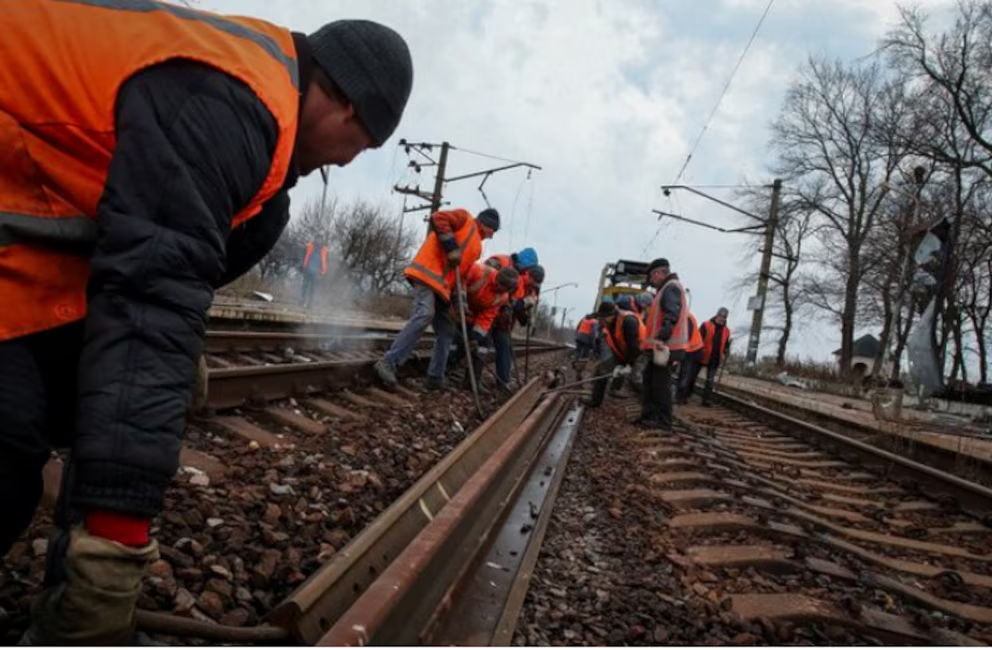
China is investing money to ensure Brazilian grains reach it as quickly and affordably as possible. Logistics is key. (Reuters)
In Brazil, logistics costs represent between 20% and 25% of the final price of soybeans, due to distances and the use of trucks. These costs are expected to decrease significantly thanks to Chinese investment. Since 2000, the area planted with soybeans has increased by 350%, while the area planted with corn has climbed by 174%. And they will continue to grow even though prices are no longer as attractive. This, of course, requires adequate infrastructure. Embrapa, the Brazilian state agricultural research company, estimates that 27 million hectares, or 17%, of Brazil's pastureland could be converted to summer crops in the future, which would increase production to 275 million tons of soybeans, up from approximately 175 million tons currently, and to 227 million tons of corn, up from 140 million tons today.
For now, logistics is changing thanks to railway construction and port expansion, fueled by Asian investment. COFCO is behind the acquisition of 979 railcars and 23 locomotives, with the aim of strengthening its logistics network for transporting grains and sugar to its terminal in Santos. This strategy seeks to boost the use of the rail network operated by Rumo, reducing dependence on road transport. Meanwhile, Rumo and the state of Mato Grosso are building a 730 km line to extend rail service to the state's agricultural heartland and connect it to the existing lines that reach the port of Santos.
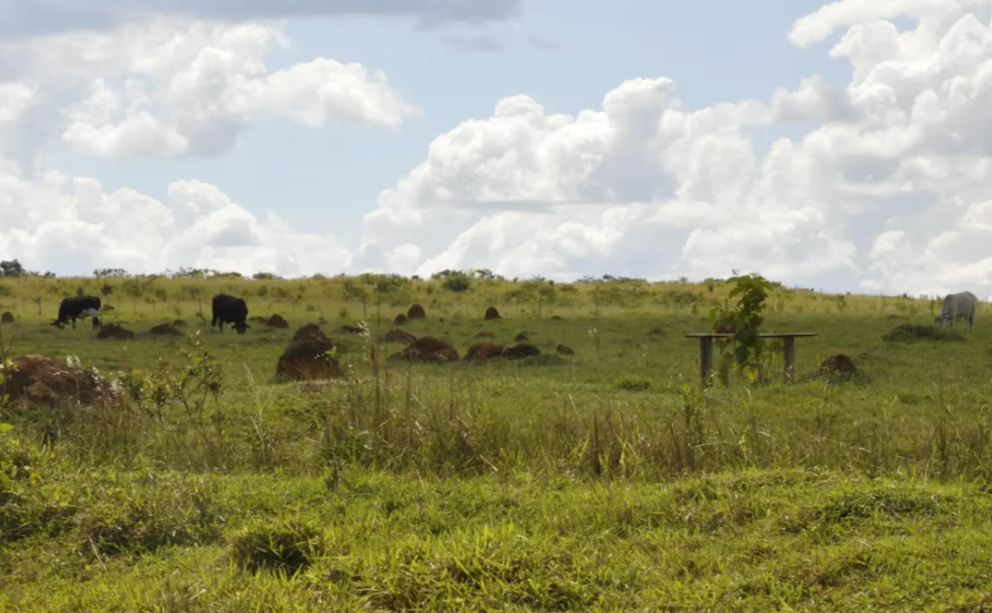
Brazil has a vast area of degraded pastureland, potentially suitable for rapid conversion to increase the volumes of soybeans and corn produced by the country (EMBRAPA)
The Brazilian government is expected to present a plan in early 2026 for railway projects worth approximately US$18.000 billion to further connect the western agricultural regions with the eastern ports. But there's more. A Chinese railway research institute will work with Brazil's Ministry of Transport on the feasibility of the Bi-Oceanic Corridor to Chancay, considering technical, economic, logistical, and environmental factors. This corridor would be about 3000 kilometers long, crossing Brazil and Bolivia, and ending at the Peruvian port. Incidentally, it could shorten Brazilian export times to Asia by up to 10 days.
While China builds long-term infrastructure to secure its supply chains, Washington is still struggling to define its trade strategy and contain the political fallout from its trade rival's move. Every new port or shipping route hinders the future recovery of American farmers. This is also a lesson for Argentina, which has damaged the finances of its powerful agricultural sector with stifling interventionism, far from allowing it to generate the kind of prosperity that Brazil has achieved.
Previous article
Dubai strengthens its position as a regional hub for fresh produceARTÍCULOS RELACIONADOS