Blueberries to the UK: FPC warns of possible cost increases and border requirements
By: Natalia Rubio Iversen
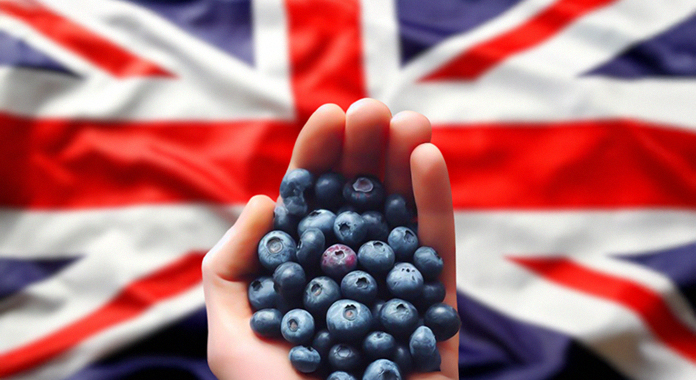
Exporters of blueberries Suppliers to the UK from countries outside the European Union could face changes in applicable border requirements if negotiations between London and Brussels result in greater sanitary and phytosanitary alignment.
The warning was issued by the Fresh Produce Consortium (FPC), which seeks to preserve the current British system of risk-based controls and obtain a long-term exemption for fresh produce from outside the EU destined exclusively for the British market.

A market of more than 82 tons
The United Kingdom imported 82.630 tons of blueberries in 2025, compared to 71.800 tons the previous year, a growth of nearly 15%.
The market is supplied throughout the year from various sources, including Morocco, Peru, Chile and South Africa, whose production windows participate in the supply at different times of the season.
Morocco, for example, exported around 19.000 tons of blueberries to the United Kingdom between July 2024 and June 2025, 44% more than in the previous season.

What could change at the border?
Negotiations between the United Kingdom and the European Union contemplate a possible sanitary and phytosanitary agreement —SPS— which could modify some of the requirements applicable to agri-food trade.
FPC requests that fresh fruit and vegetable products from third countries and destined exclusively for the British market be exempt from the so-called "dynamic alignment" with European regulations.
According to the consortium, this formula would allow the current British controls based on scientific criteria and risk assessment to be maintained, while products subsequently destined for the European Union would continue to fully comply with EU requirements.
FPC maintains that the current regime registers 99,5% compliance at the border and considers that this performance supports a system of controls proportional to the risk.
Each delay reduces the available commercial life.
Beyond the regulatory cost, for a perishable fruit, time is another critical factor.
FPC warns that additional certifications, inspections, and procedures can cause border delays, reduce the available commercial life of products, increase losses and waste, and hinder compliance with supply programs.
In the case of blueberry For fresh produce, this aspect is especially relevant because, by the time it enters the destination market, part of its post-harvest life has already passed during transport and prior logistics operations. Any additional delay therefore reduces the time available for its sale.
FPC estimates over £300 million in costs for the fruit and vegetable sector
The scope of the warning goes beyond the blueberryFPC estimates that additional certifications, inspections and official fees could generate more than £300 million annually in costs for all affected fruit and vegetable imports.
The figure does not specifically correspond to the industry of blueberrybut to approximately four million tons of fresh produce that the United Kingdom imports annually from non-EU countries.
The consortium also warns that increased regulatory burdens could make the British market less viable for smaller importers and international suppliers, reducing competition and sourcing alternatives.
The decision will be reached at the summit on November 20th.
FPC is calling for the protection of international fresh produce supply chains to be part of the UK-EU summit negotiations scheduled for November 20 in Brussels, and is urging industry involvement before any new regulatory scheme is finalized.
For Nigel Jenney, chief executive of the Fresh Produce Consortium, maintaining access to international suppliers is fundamental to British supply.
“The supply chain from the rest of the world is not optional. It is essential to feed the country and mitigate risks to food security,” he said.
He added: “We support a reasonable readjustment, but not at any cost.”
Read also:
- Morocco is approaching 90 tons of blueberries and is gaining ground in Europe
- Western and Central Europe surpasses North America in imports of fresh blueberries
- Few gateways, different import networks: this is how Peruvian blueberries are distributed at their destination
- Peruvian blueberries in the UK: moderate but consistent growth
- The South African blueberry season is showing strong growth and quality
- Fruit Attraction 2026: Chilean blueberries redefine their competitiveness through genetics, condition, and new markets
ARTÍCULOS RELACIONADOS